Flags are the oldest way of sending a message to a driver, and they are still used at every Grand Prix. Marshals show them around the track, and drivers also see the signals on lights and on their steering wheels.
Yellow flag
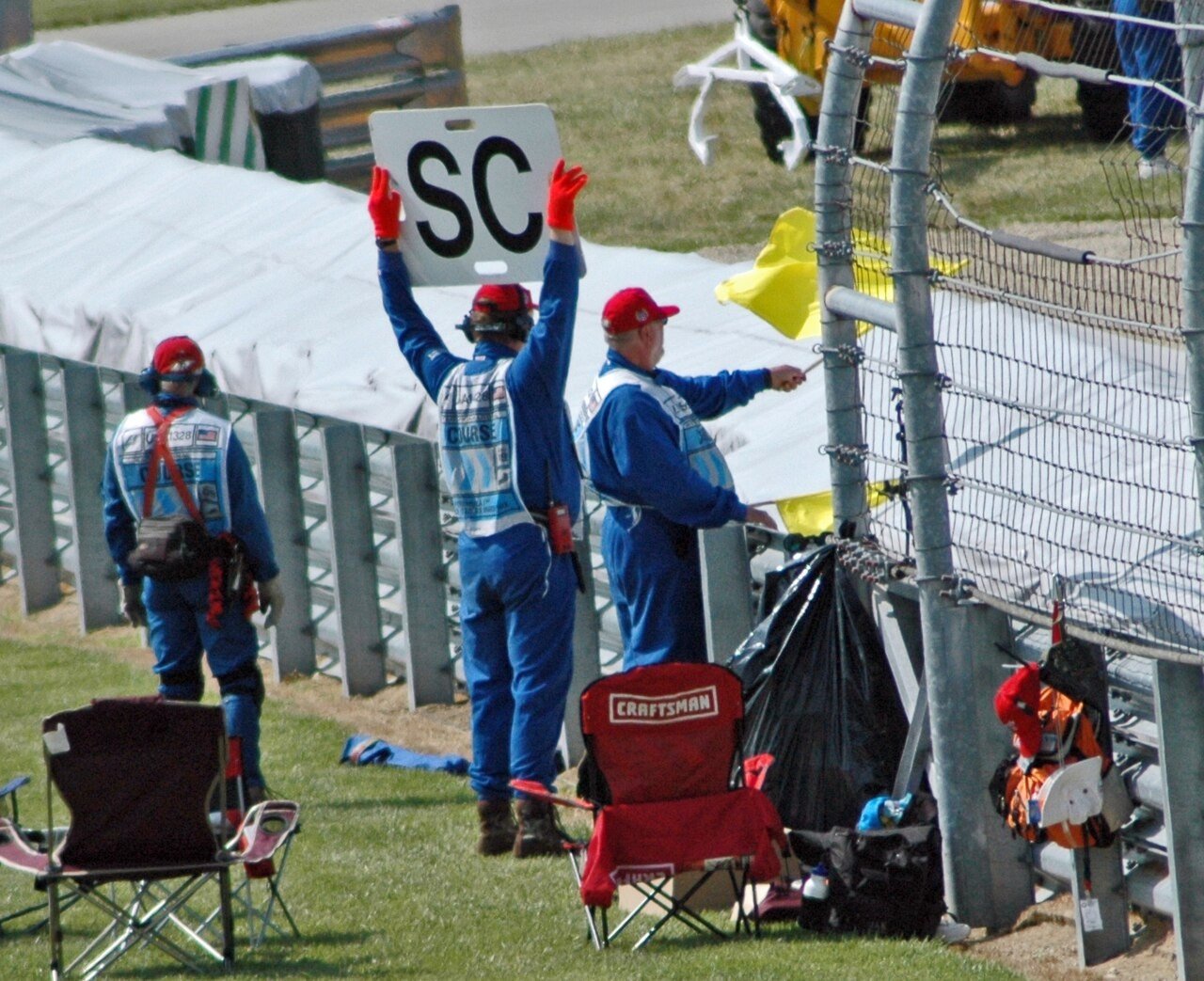
A yellow flag warns of danger ahead, such as a car stopped by the side of the track. Drivers must slow down, and overtaking is not allowed in the zone where the flag is shown.
Red flag
A red flag means the session has been stopped. Cars return to the pit lane and wait, and the race restarts when it is safe.
Blue flag
A blue flag tells a slower driver that a faster car is about to lap them and that they must let it through.
Green and chequered flags
A green flag means the track is clear, for example after a danger has been dealt with. The chequered flag, with its black and white squares, signals the end of the race or session.
Watch: a post from Formula 1
Here is a recent post from the official Formula 1 account on X.
Cover photo: race marshals show a safety car board and a yellow flag. Photo: Dan Smith, CC BY-SA 2.0, via Wikimedia Commons.