Formula 1 cars race on special tyres that wear out as the laps pass, so pit stops are part of the strategy for every Grand Prix.
Tyre compounds
Dry-weather tyres come in different compounds, from softer to harder. A soft tyre grips better and is quicker over a lap, but it wears out sooner. A hard tyre lasts longer but gives up some speed. Teams choose which to use at each stage of the race. For wet conditions there are also intermediate and full wet tyres with grooves to clear water.
What happens in a pit stop
In a pit stop the driver stops in the team's pit box and a crew changes all four wheels. The best crews do this in about two to three seconds. A slow stop can cost a driver positions, so teams practise it again and again. Refuelling is no longer allowed.
Undercut and overcut
Teams can gain track position by choosing when to stop. Stopping early to fit fresh tyres and set faster laps is called an undercut, while staying out longer on older tyres to profit from a rival's stop is called an overcut.
Watch: a video from Formula 1
Here is a recent video from the official Formula 1 YouTube channel.
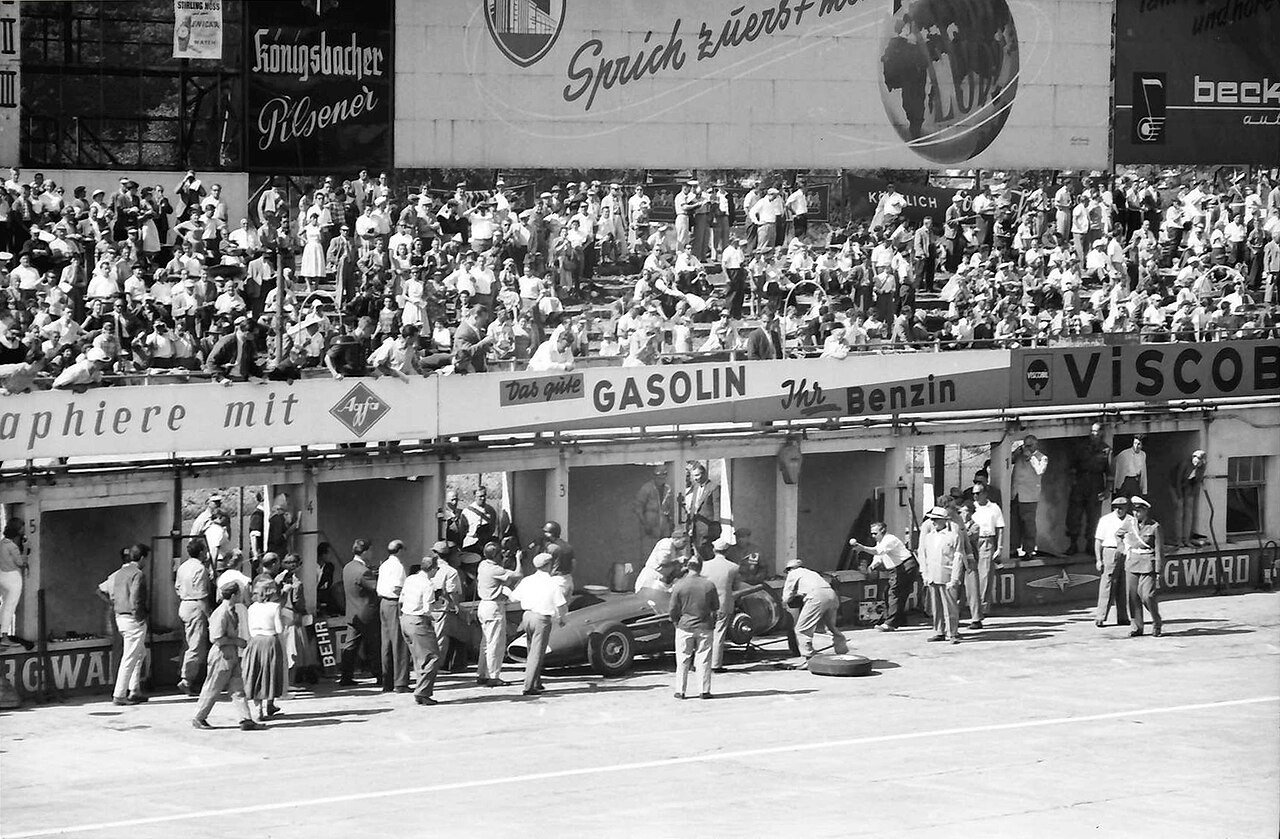
Cover photo: Juan Manuel Fangio stops for fuel and fresh tyres at the Nürburgring in 1957. Photo: Willy Pragher, CC BY 3.0, via Wikimedia Commons.