Cards are the referee's way of controlling a match. They are shown by the referee, and every fan should know what each one means.
The yellow card
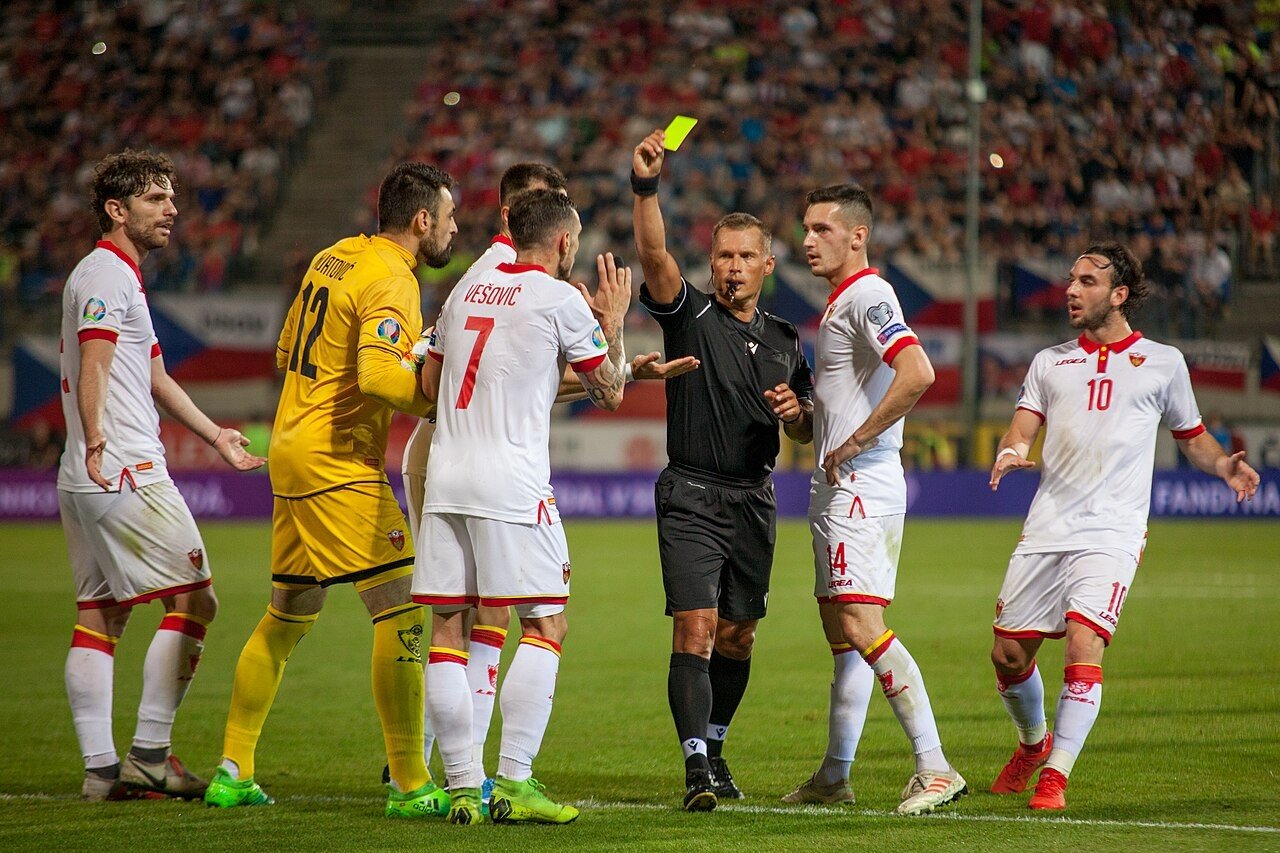
A yellow card is a caution. Players can be booked for reckless fouls, time-wasting, arguing with the referee and other offences. A player who receives two yellow cards in the same match is sent off, because the second yellow is followed by a red card.
The red card
A red card means the player must leave the pitch, and the team plays with one fewer player for the rest of the game. A straight red card is shown for serious offences, such as violent conduct, denying an obvious goal-scoring chance with a foul or using offensive language. The player is usually banned from at least the next match.
Where VAR comes in
Many competitions use a video assistant referee, known as VAR, to check major decisions: goals, penalties, straight red cards and mistaken identity. VAR does not make decisions by itself. It helps the referee review what happened, and the referee makes the final call.
Watch: a video from UEFA
UEFA's official YouTube channel posts short clips from European matches. Here is one of its recent videos.
Cover photo: a referee shows a yellow card during a EURO 2020 qualifier between the Czech Republic and Montenegro. Photo: Tadeáš Bednarz, CC BY-SA 4.0, via Wikimedia Commons.